The Ghost Ship the World Rejected: How One Maharaja Became a Father to 600 Orphans
1942: A "ghost ship" of 600 Polish orphans is rejected by every port. The British say "No," but one Maharaja says "Yes." Discover the true story of a Human Angel who defied an empire, built a sanctuary, and chose the law of the heart over the law of the state. One man’s "Yes" changed history

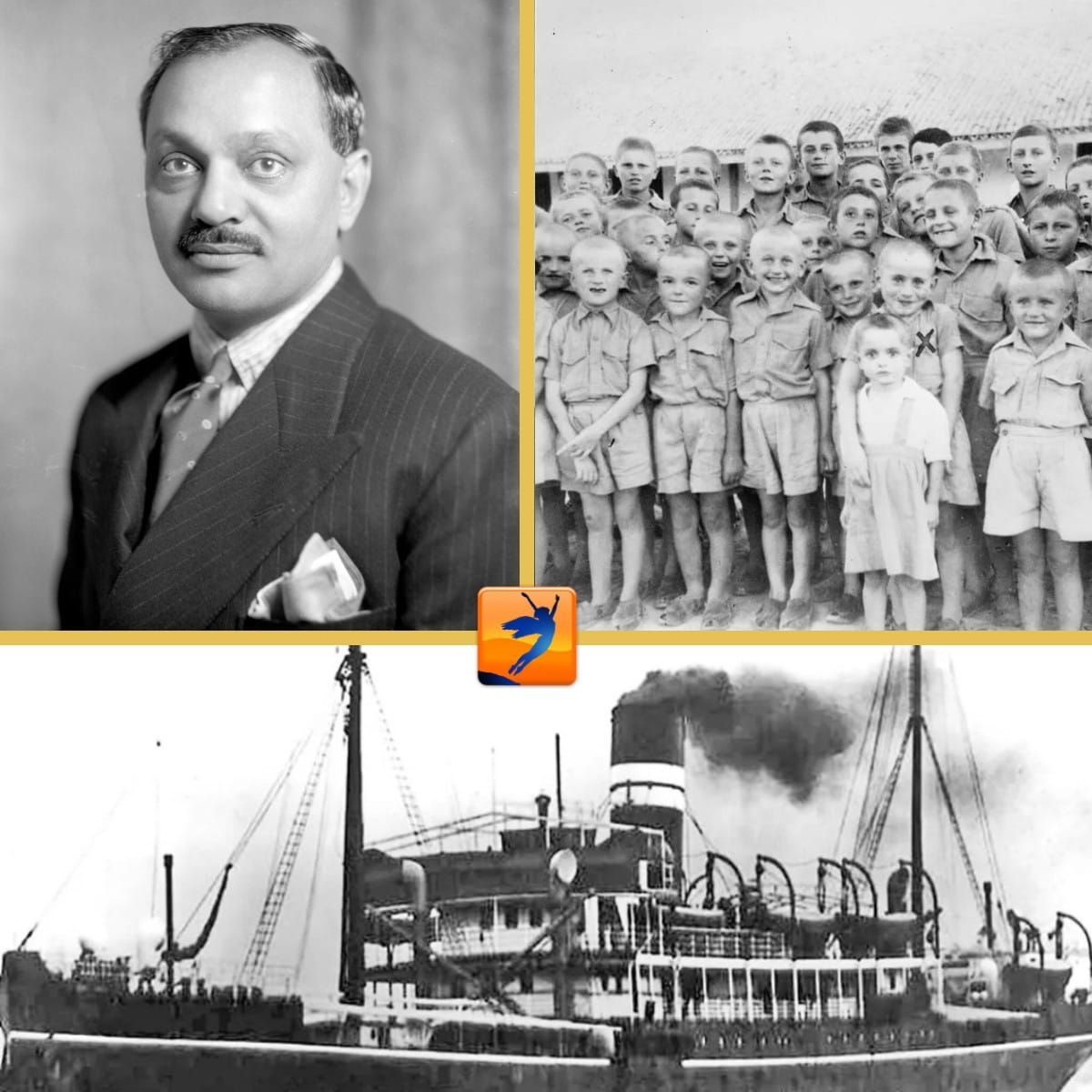
A ‘ghost ship’ carrying 600 sick children needed a landing. The British said: ‘No’. But a Human Angel said, ‘Yes.’
In 1942, a rust-streaked freighter creaked across the Arabian Sea with over 600 Polish children onboard—most of them orphans, all of them survivors of Siberian labor camps. Their faces, gaunt and hollow-eyed, peered over the railings as hope faded with each passing wave. Exhausted, malnourished, and ravaged by disease, the children found themselves turned away by every port from Iran to India. They weren't simply refugees; they were the living debris of a shattered world order, their dreams ground to dust by the machinery of war. To truly grasp the magnitude of their ordeal, one must first confront the unrelenting nightmare these children had already endured.
The Road from Siberia: A Trail of Tears
In 1939, following the Soviet invasion of Poland, hundreds of thousands of Polish families were forcibly deported to the frozen depths of Siberian labor camps. Families were shattered by cold, starvation, and overwork. When Germany invaded the Soviet Union in 1941, an "amnesty" was declared, and these Poles were suddenly released, with nothing.
The children—many having lost their parents to the merciless cold and hunger of the camps—set out on a punishing "long march" southward, driven by nothing but the instinct to survive. They trudged through the unforgiving mountains of Central Asia, sometimes on blistered feet, sometimes packed like livestock into cattle cars. By the time they reached the port of Ashgabat, they were shadows of themselves: skeletal frames, haunted by the thousand-yard stare known as "Siberian eyes," clothed only in tatters. Their desperation was so profound, their suffering so raw, that even decades later, it defies the imagination.
And so, these children were crowded onto a freighter. For months, not days, nor weeks - months! - they sailed the Arabian Sea, seeking a port. They were a "ship of ghosts"—malnourished, plagued by dysentery, and emotionally broken.
When the ship finally limped into Bombay (Mumbai), salvation seemed within reach. Instead, British colonial authorities delivered a devastating verdict. Fearing that compassion might strain wartime resources or open the floodgates for other refugees, they refused to let the children set foot on land. The cold calculation was staggering: to the British, rescuing 600 innocent lives was a "dangerous precedent." Bureaucracy triumphed over humanity. The order was clear—leave the harbor. The children, already clinging to life by a thread, were condemned to drift and die at sea. To add insult to injury, the ship - supposedly the SS Bandra - was a "British India" ship, which highlights the irony: a British ship carrying children to a British-controlled port, only to be told by British authorities that they couldn't land. Even recounting this moment, it is impossible not to shudder at the chilling indifference that doomed so many, and to question how the machinery of empire could turn so brutally against the most vulnerable.
The Maharaja’s "Private" Rescue
Hearing of this cold-heartedness, Maharaja Digvijaysinhji Ranjitsinhji Jadeja of Nawanagar was outraged. He could not sit on the sidelines and watch the tragedy unfold. If the ship had not landed, the children were going to die. So he made what every kind-hearted soul would have done without even thinking. He ordered the ship to dock at his private port in Rozi. As a member of the Imperial War Cabinet, he knew the British could not easily touch him.
The British were furious at his insubordination, but the Maharaja’s moral weight made it impossible for them to act against him. He proved that even in the middle of a world war, a single person can create a sanctuary of peace if they dare to choose the "law of the heart" over the law of the state.
He didn't just provide a roof; he built Balachadi, a specialized village near his summer palace. He insisted they not be "Indianized," but instead cherished as Poles. He built them a school, a library, and a Catholic chapel, ensuring they kept their language, faith, and identity alive in the heart of India.
The Legacy of "Bapu"
For four years, the Maharaja funded the children’s lives entirely out of his own treasury. He ignored British diplomatic pressure and the logistical strain of the war.
- The Return: In 1946, as the war ended, most of the "Polish Children of Jamnagar" moved to the UK, Australia, or back to a reorganized Poland. They left as healthy, educated adults rather than the broken orphans they had once been.
- The Eternal Bond: They never forgot their "Bapu" (Father). Decades later, survivors formed the Association of Poles in India to keep his memory alive.
- National Recognition: Today, he is a national hero in Poland. He was posthumously awarded the Commander’s Cross of the Order of Merit—the highest honor Poland can bestow on a foreigner—and a prominent square in Warsaw bears his name.
The Lesson: Be a Human Angel
History sometimes turns on the decisions of a few, or even one. This narrative is haunted by words like “ghost ship,” “dangerous precedent,” and “law of the heart.” The British authorities chose the cold security of rules, while the Maharaja saw only the raw humanity of children in desperate need. One side was paralyzed by precedent—afraid to set an example of compassion. The other, guided by conscience, became a living example.
The lesson is clear: In the face of suffering, bureaucracy and fear can render us inhuman. But the courage to listen to the “law of the heart”—to become a ‘Human Angel’—can change lives and echo across generations. Be the person who chooses empathy over indifference, action over excuses, and the law of the heart over the law of the state. Because sometimes, all the difference in the world lies in one person saying, “Yes.”
We Are Human Angels - Authors
Awakening the Human Spirit
We are the authors of 'We Are Human Angels,' the book that has spread a new vision of the human experience and has been spontaneously translated into 14 languages by readers.
We hope our writing sparks something in you!

Support Us
Support We Are Human Angels and join the tribe. Your contribution makes a difference!
Show Your Appreciation